
The modern practice of acupuncture is incredibly diverse. From its roots in 3000 B.C.E China, acupuncture has been assimilated and adapted by cultures on every continent and is currently the most practiced form of traditional medicine worldwide.
Strictly speaking, acupuncture is the use of the filiform, or solid needle as a tool for manipulating body tissue in a way that improves circulation, reduces restriction, and enhances natural homeostatic mechanisms for healing and repair.
Each tradition of acupuncture has its own context for using the needle and techniques to support it. There are very old and established lineages of acupuncture coming out of China, Vietnam, Japan, Tibet, India, Taiwan, and Korea. Newer and modern iterations of acupuncture are TCM or Traditional Chinese Medicine (birthed out of the cultural revolution in 1950's China), 5 element acupuncture, auricular acupuncture, scalp acupuncture, electro acupuncture, Acupoint injection therapy, and dry needling to name a few.
What type of acupuncture do you practice?
I was lucky enough to attend one of a handful of acupuncture schools in the US that offers a curriculum based in Classical Chinese Medicine. Almost all other schools in the US teach TCM or 5 element based programs, which are essentially westernized versions of Chinese Medicine.
TCM, in particular, was the product of China's cultural revolution under Mao in the 1950s and 60s. Communists launched violent campaigns against the "the 4 olds,” which included old culture, customs, ideas and habits. They systematically targeted anything that might interfere with compliance to the new political regime, destroying temples, sacred objects and books and persecuting intellectuals, spiritual leaders, academics and perceived class enemies.
It is in this climate that Chinese Medicine was "modernized," culling huge portions of the philosophical and spiritual aspects of the medicine that imbue it with depth and connection to the natural world. TCM adopts the materialist paradigm of the Western world and the flow chart model of diagnosis and prescriptive treatment. While this paired down version of Chinese medicine allowed it to be more readily assimilated by the West, it is certainly missing a lot of its original beauty and genius.
Only recently are the classical teachings being resurrected, ironically, mostly in the United States, Europe, and Australia where so many gifted spiritual practitioners and intellectuals from China sought asylum and set down roots. The classical medicine program at the school I attended, Daoist Traditions in Asheville North Carolina, was headed by an 88th generation Daoist priest Jeffrey Yuen who has dedicated his life to preserving the traditions of his Jade Purity lineage.
The study of Chinese medicine in its completeness is incredibly profound. It views the body as consciousness animating the physical form (as opposed to the modern materialist paradigm where physical form generates consciousness) and goes on to describe in great detail how our consciousness directs the flow of our physiology, manifesting as health and disease. This larger view is much more aligned with the practice of holistic medicine, where the intention is to consider each individual as a unique and complex system of relationships rather than an isolated and mechanistic organism whose dysfunctions are a riddle that needs to be solved.
The Classical approach to Chinese medicine acknowledges that each person is imbued with a unique “essence” that is not only made manifest in our physical form but is gradually revealed in the course our life follows, our sense of purpose, and our choices. All aspects of life, physical, emotional, and spiritual are considered equally important for helping a patient move toward integration and wholeness.
What does a session look like?
New patient acupuncture sessions are 90 minutes long, allowing for a full intake and acupuncture treatment. Return acupuncture sessions are an hour long.
During each session we will discuss your goals for treatment and I will evaluate some objective measures of your health by looking at your tongue and taking your pulse.
While there are many different acupuncture techniques I may employ, needle retention is generally 20-30 min for each set of needles.
I typically do not leave the room during a session unless a patient requests to have some personal time while the needles are in place. I also use adjunct techniques to stimulate the body during the needle retention time. This may include acupressure, cupping, moxibustion, infrared therapy, essential oil application, gua sha, electroacupuncture, reflexology, or acupoint injection therapy. You can read a little bit about each below.
Acupressure- this is simply manual stimulation of the acupuncture points.
Cupping- this is the use of glass, silicone, plastic or bamboo devices that create negative pressure against the body. Cupping softens connective tissues, increases blood flow, promotes lymphatic return, and has a profoundly sedating effect on the nervous system.
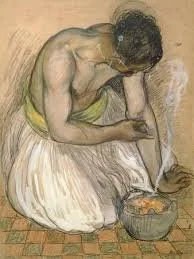
Moxibustion- this is a technique of burning an herb called mugwort above acupuncture points or acupuncture needles. Burning moxa is basically a method for creating a very localized delivery system for infrared heat during treatment.
Infrared therapy- this is the application of infrared waves to the body to facilitate tissue repair, enhance circulation, reduce inflammation, lower blood pressure, and sedate the nervous system. Various tools are used for this purpose including TDP lamp and Biomat.
Essential oil application- Essential oils are the distilled extracts of fat-soluble medicinal compounds found in plants. Essential oils have a wide range of effects on the body. Many have antimicrobial, anti-inflammatory, or immuno-stimulant properties and can have a positive impact on mood and regulation of the nervous system. Essential oils may be applied at acupuncture points or in lotion or oils used during manual therapies.
Gua Sha (also known as instrument assisted manipulation)- this is the use of a smooth edged tool to "scrape" the body in order to elicit changes to circulation and improve fascial restriction to restore normal range of motion.
Electroacupuncture- This is the use of a very small current applied to the acupuncture needle to reduce pain, eliminate muscle spasm, and promote tissue recovery after injury.
Acupoint injection therapy- This therapy is a modern addition to the scope of practice of acupuncturists in certain states, including Florida, and requires advanced training. Sterile injectable solutions such as saline, homeopathics or vitamin/mineral solutions are introduced subcutaneously or intramuscularly into acupuncture points where they have local and systemic impacts. There are a wide range of conditions that may benefit from the use of acupoint injection therapy, but it is most commonly used for chronic pain.
How can I schedule a session?
Currently, I am accepting new patients for acupuncture on a very limited basis as my schedule allows. I typically do not have space for new patients during season (October-April), but you can still request to be placed on a waitlist during this time. You can contact me by e-mail at silverwaveacupuncture@proton.me, by calling 239-949-6002, or by filling out the contact page of this website.
How much does treatment cost?
New patient acupuncture sessions are 90 minutes and cost $180 for adults
New patient acupuncture sessions are 60 minutes and cost $140 for children (0-16 years)
Return acupuncture sessions are 60 minutes and cost $140 for adults
Return acupuncture sessions are 50 minutes and cost $120 for children (0-16 years old)
Cash, check, and credit card are all accepted forms of payment. If you need to cancel or reschedule your session please try to give 12 hours notice.
--
Acupuncture
What is acupuncture?